
 By
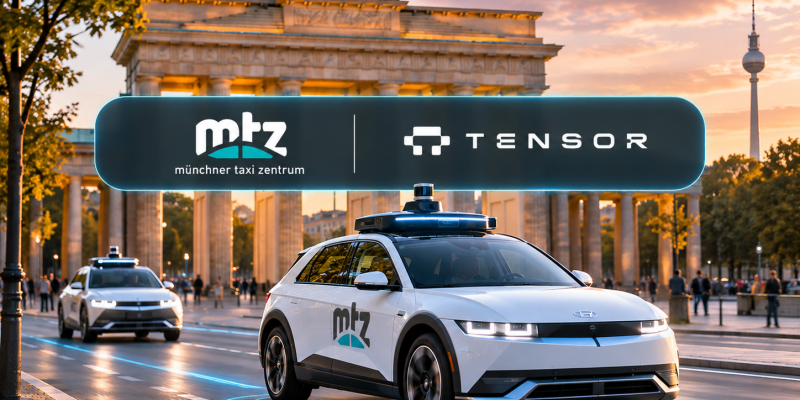
Autonomous vehicle developer Tensor has reached an agreement with German taxi operator Münchner Taxi Zentrum (MTZ) to deploy up to 500 self-driving taxis, marking a significant step toward the commercialization of autonomous mobility in Germany. Announced on October 27, 2026, the partnership aims to introduce autonomous vehicles into an established taxi network as the European market prepares for broader adoption of driverless transportation.
Under the agreement, MTZ plans to integrate Tensor’s autonomous vehicles into its fleet, combining the technology company’s self-driving capabilities with the operator’s experience in passenger transportation. The planned deployment represents an ambitious commitment to autonomous mobility, although the companies have not established a confirmed timeline for the full rollout.
Tensor is developing a purpose-built autonomous electric vehicle designed to support both privately owned and commercial driverless transportation. Its technology incorporates artificial intelligence, advanced sensor systems and automated driving software intended to enable Level 4 autonomous operation within defined conditions. The company is positioning its vehicle as a platform that can support multiple mobility applications, including robotaxi services.
For MTZ, the agreement offers an opportunity to modernize its operations and explore new transportation models. Integrating autonomous vehicles into an existing taxi business could eventually help operators address driver availability, improve fleet utilization and extend service coverage. However, realizing these benefits will depend on regulatory approvals, operational performance and the economics of deploying autonomous vehicles at scale.
Germany provides a particularly relevant environment for this initiative. The country established a legal framework for Level 4 autonomous driving in designated operating areas in 2021, creating a pathway for commercial driverless services under specific regulatory conditions. Nevertheless, autonomous taxi operators must still meet demanding safety, technical and operational requirements before launching passenger services.
The partnership also reflects a broader shift in the autonomous mobility industry. Rather than relying exclusively on technology companies to build their own ride-hailing networks, autonomous vehicle developers are increasingly exploring collaborations with established transportation providers. These arrangements allow technology suppliers to leverage existing operational expertise, local market knowledge and customer relationships while focusing on autonomous driving systems.
If successfully implemented, the proposed 500-vehicle deployment could become an important demonstration of how autonomous technology can be integrated into traditional European taxi operations. For Tensor and MTZ, the agreement represents an opportunity to test the commercial potential of driverless mobility in a regulated market, while contributing to the ongoing transformation of urban transportation across Germany.









Comments