
 By
XPENG is pushing its intelligent vehicle strategy into international markets with the new L03, an AI-focused SUV coupé combining a redesigned digital cockpit with the company’s next generation of advanced driver assistance technology. The model was launched simultaneously across 65 markets, making it one of XPENG’s most globally focused vehicle launches to date.
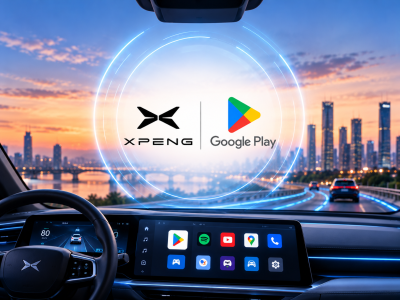
Inside, the L03 introduces the international version of XPENG’s New Global Intelligent Cockpit Experience, powered by XOS 6. The cabin centers around a 15.6-inch display and combines a head-up display, intelligent climate functions, ambient lighting and connected services within a redesigned interface.
A major part of the experience is XPENG’s new AI voice assistant. Rather than relying primarily on predefined commands, the system is designed to understand conversational language, context and user intent. It also supports multilingual interaction, an important capability as XPENG expands across European and other international markets.
Navigation is also becoming more deeply integrated with the vehicle’s intelligence. XPENG has partnered with Google Maps for the L03, becoming the first APAC-based global automaker to adopt the Google Maps Auto SDK. The integration is intended to connect navigation more closely with both the cockpit experience and driver-assistance functions.
On the driving side, the L03 showcases XPENG’s Next Generation Pilot, based on its second-generation Vehicle-Language-Action architecture, VLA 2.0. XPENG says the system is designed to interpret complex real-world driving situations rather than depend exclusively on predefined, task-specific ADAS functions. A European introduction is planned from 2027, subject to regulatory approval.
The L03 can also be equipped with three of XPENG’s in-house Turing AI chips, delivering combined computing performance of up to 2,250 TOPS. That computing capacity supports XPENG’s broader ambition to bring increasingly sophisticated AI models into both the cockpit and driving experience.
With the L03, XPENG is therefore positioning AI as more than an individual infotainment feature. Voice interaction, navigation, cockpit software and driver assistance are increasingly being developed as parts of the same intelligent vehicle architecture — an approach that could become increasingly important as Chinese automakers compete for connected-car customers globally.




Comments