
 By
By 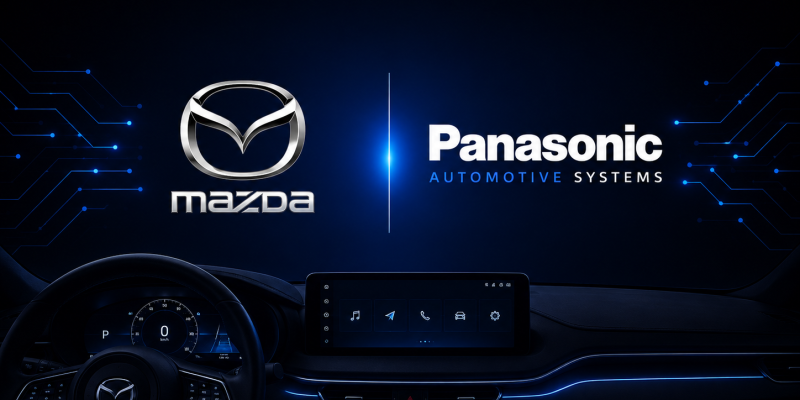
Mazda has selected Panasonic Automotive Systems‘s cockpit domain controller (CDC) for the next-generation CX-5, reinforcing the growing role of centralized computing in software-defined vehicles.
The cockpit domain controller will serve as the central computing platform for the vehicle’s digital cabin, integrating multiple functions—including infotainment, digital displays, connectivity, and vehicle controls—into a single high-performance architecture. By consolidating electronic systems, Mazda aims to improve processing power, simplify software updates, and create a more seamless user experience.
The adoption of Panasonic’s CDC reflects the automotive industry’s ongoing shift away from distributed electronic control units (ECUs) toward centralized computing platforms. This architecture enables faster software development, easier feature deployment through over-the-air updates, and greater flexibility for introducing future digital services throughout a vehicle’s lifecycle.
For the new CX-5, the cockpit domain controller will support a richer human-machine interface (HMI), delivering smoother graphics, faster system responsiveness, and improved integration across infotainment, navigation, driver information, and connected services. The platform also provides the computing foundation needed for increasingly sophisticated AI-powered and cloud-connected applications.
The collaboration further strengthens Panasonic Automotive Systems’ position as a supplier of next-generation digital cockpit technologies as automakers continue transitioning toward software-defined vehicles built around centralized computing architectures.
As vehicle interiors become increasingly digital, cockpit domain controllers are emerging as a core technology, enabling manufacturers to deliver smarter, more connected, and continuously evolving in-car experiences.







Comments