
 By
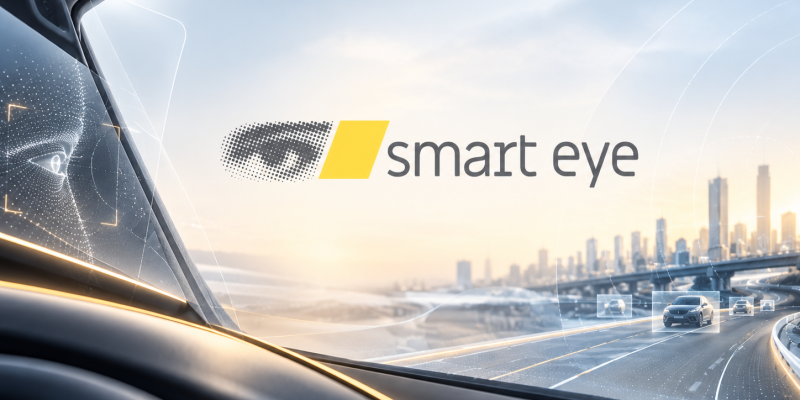
Smart Eye has unveiled a new multimodal in-cabin AI agent designed to move automotive assistants beyond voice commands by giving them a much deeper understanding of the driver, passengers, vehicle and surrounding environment.
The system combines information from multiple sources, including voice, driver identity, gaze, attention, emotion, driver state and occupancy, alongside data coming from the vehicle’s interior and exterior sensors. The result is an AI agent capable of interpreting what is happening inside and outside the car before deciding how to respond.
One particularly interesting application combines eye tracking with exterior sensing. This could allow a driver to look at something outside the vehicle and ask a contextual question about it, without having to precisely describe the object or location to the assistant.
Smart Eye is also demonstrating how the agent can interact directly with connected vehicle functions and services. Using live driver and cabin information, it can take actions and even dynamically create dashboard widgets relevant to the situation, bringing generative and agentic AI directly into the vehicle HMI.
The multimodal approach could also address one of the challenges facing advanced automotive AI: computing requirements. By providing an agent with more precise contextual information from the start, Smart Eye says the system can reduce the amount of processing required to determine what the user wants and produce a useful response.
The platform is designed to remain technology-agnostic, allowing automakers to combine Smart Eye’s contextual intelligence with different foundation models, voice technologies and AI agents. Processing can also take place either locally at the edge or through cloud-based systems.
The concept points toward a new generation of automotive assistants that do more than wait for a command. By combining human behavior, vehicle data, ADAS information and environmental perception, the car itself could increasingly understand what occupants are looking at, what they need and which vehicle function or digital service should respond.








Comments