
 By
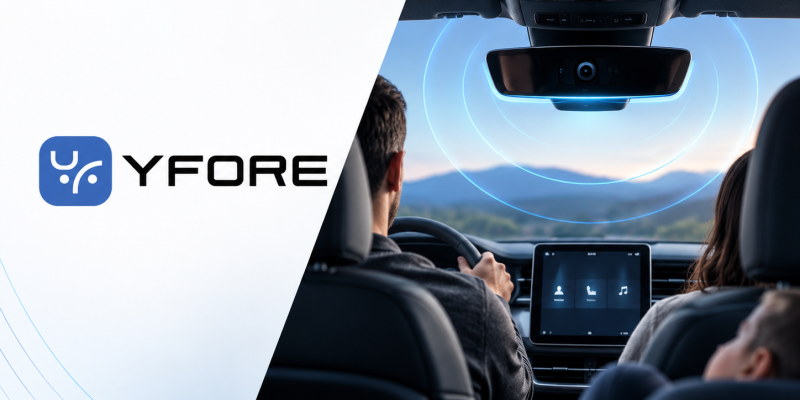
Yfore Technology has introduced a new Occupant & Driver Monitoring System (ODMS) designed to provide full-cabin sensing through a combination of camera and radar technologies. The system was unveiled alongside the opening of the Tier 1 supplier’s new North American manufacturing facility in Georgia.
Rather than relying exclusively on cameras, Yfore combines a DMS/OMS-enabled smart mirror with automotive-grade cabin radar. The approach is intended to overcome some of the limitations of vision-only systems, including areas obscured by seatbacks, covered occupants and difficult-to-monitor footwells.
The smart mirror’s high-definition camera monitors the driver for signs of fatigue, distraction and unresponsiveness. At the same time, roof-mounted radar can detect occupants through clothing, blankets and seatbacks, including micro-breathing signals from passengers in rear rows and other areas that may be difficult for cameras to see.
Together, the technologies support seven core functions: driver fatigue detection, distraction monitoring, unresponsive-driver detection, phone-use detection, seatbelt monitoring, occupant classification and full-cabin life-presence detection. Yfore says the architecture is designed to support automakers working toward demanding safety requirements, including Euro NCAP five-star ratings.
Integration is also central to the design. By incorporating the optical components into the rear-view mirror and combining them with a compact radar module, Yfore aims to reduce the number of separate sensors, headliner openings and wiring required inside the cabin. This can simplify integration while helping automakers preserve cleaner interior designs.
For the broader intelligent-cockpit market, the technology illustrates how in-cabin sensing is becoming another layer of the digital vehicle experience. Understanding whether a driver is attentive, whether seats are occupied and what is happening throughout the cabin can increasingly influence how vehicles manage safety functions and human-machine interaction.
As vehicles become more automated and software-defined, systems capable of interpreting both the driver and passengers could ultimately play a larger role in creating context-aware cabin experiences — complementing the apps, AI assistants and digital services already transforming the dashboard.






Comments